
Interview with Josip Zic, CRPA’s New President
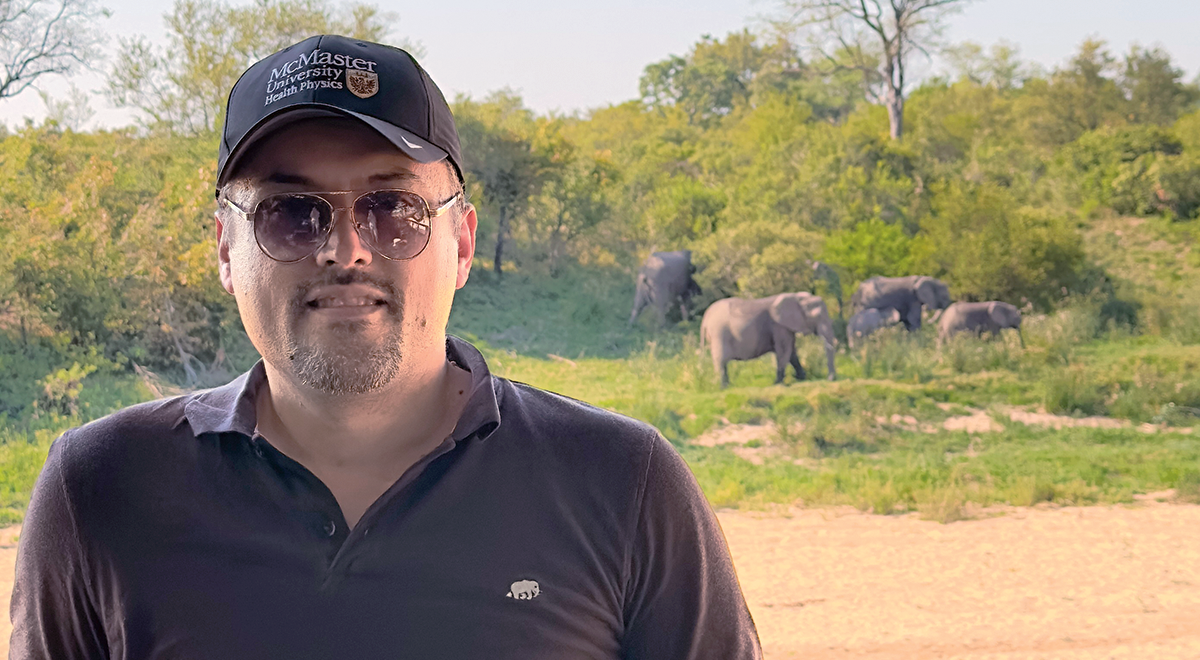
Regular readers of the CRPA Bulletin have come to expect us to interview incoming CRPA presidents. In this issue, we are talking with Josip Zic, CRPA’s new president.
Tell us a little bit about yourself—work, life, family life.
When I was accepted to the medical and health physics program at McMaster University, I was really focused on a career in health care and, after my first work term as a medical physics student at Princess Margaret Hospital, I was sure that I had found the career for me.
For my second work term, my co-op advisor encouraged me to try something else. I had the opportunity to work at Ontario Power Generation (OPG) in Darlington. That experience led me to a career in radiation protection, where I had opportunities to work with some truly amazing individuals, apply health physics principles in support of the operation of OPG’s nuclear power plants, and get certified by the Canadian Nuclear Safety Commission (CNSC) as a Responsible Health Physicist for the Pickering Nuclear Generating Station. I also completed my master’s degree in health physics, obtained my Certified Health Physicist (CHP) designation with the American Board of Health Physics (AAHP), and started my PhD at McMaster University.
About eight years ago, I was offered the health physics director role at McMaster University, where I am fortunate to work with an extremely talented group of nuclear professionals and researchers. The transition from the nuclear power industry to academia was extremely interesting. After spending my entire career up to that point in industry trying to never push the “safe operating envelope,” I am now working at an institution that is focused on research, development, and venturing into new and innovative areas of nuclear applications.
Most recently, I have been appointed interim chief nuclear officer at McMaster University, where I am responsible for the safety and regulatory compliance of all licensed nuclear activities. Additionally, as the president of Senior Health Physicist Nuclear Services, I provide consulting services regarding the safe use of nuclear technology across the nuclear industry, ranging from decommissioning and facility licensing to radiation safety, design, and emergency preparedness planning for advanced reactor technologies.
I also teach health physics at the undergraduate and graduate levels, which gives me the opportunity to introduce students to this exciting field of study.
Everything that I have achieved professionally is a result of the amazing support of my beautiful wife, who I have been blessed to be with for more than 25 years. We have two boys, aged 12 and 14, who keep us extremely busy. Being a father is one of the greatest joys of my life. I love playing sports and building things with the boys. Most recently, we built a three-storey treehouse in the backyard.
We have a Christian home and are active in our local church, where I am an ordained elder. As a family, we really enjoy the outdoors and travelling; we do our best to go to Croatia and Serbia every year, where we have the opportunity to practise speaking our native language and introduce our children to their family roots. (The beaches are also beautiful!) We love road trips and have travelled to every province in Canada, more than 30 States, across a large part of Europe, and even through the Australian outback.
I wish I could say that I don’t take my work home with me, but one of my favourite hobbies is collecting publicly accessible historical or natural radioactive items. Part of my collection is at the OPG health physics laboratory, and the rest is located in the lobby of the Nuclear Research Building at McMaster. I really enjoy using these items to teach people about nuclear history, radiation in their environment, and how radiation safety principles have evolved.
When did you join CRPA?
I first joined CRPA in 2010. Coming primarily from a nuclear power background, I found CRPA to be a great opportunity to get to know and learn from radiation protection professionals across the industry. This really opened my eyes to the diverse range of nuclear applications in Canada and the important role of radiation protection in ensuring the safe application of these technologies.
Why did you decide to run for CRPA president?
I have always appreciated the work of CRPA and the individuals that donate their time, talents, and experience to further our profession. At McMaster University, I am fortunate to be part of an organization that encourages and supports its staff to get involved in professional societies and standards organizations.
I have been able to get more involved in professional nuclear societies, like CRPA. I am also the vice-chair of the Radiation Protection Working Group for the World Nuclear Association (WNA), on the N292 series technical committee for the Canadian Standards Association, and on Task Group 129 of the International Commission on Radiation Protection (ICRP). I have found it extremely rewarding to take part in these associations and give back to the radiation protection profession nationally and internationally.
While I been working in radiation protection for more than 20 years, I felt that I had not done enough to support CRPA. With McMaster’s support, I have been able to get more involved over the last eight years. Being part of the Local Organizing Committee for the Hamilton CRPA conference in 2025 was an amazing experience. However, I wanted to do my part to continue to support CRPA’s work , continue to promote the radiation protection profession, and look for opportunities to collaborate nationally and internationally to best support the application of existing and advanced nuclear technologies.
What do you plan to focus on during your presidency?
In addition to supporting CRPA and its work as Canada’s professional association for radiation safety professionals, I would like to focus on four areas:
- Involvement in the development of international standards and recommendations
With the revision of the ICRP recommendations in progress, CRPA needs to ensure it is involved in this process. Canada has such a wealth of knowledge and experience in the application of radiation safety. We need to continue providing input into provincial and national regulations and standards, as well as ensure that we are involved in the international standards and guidelines that will influence our regulatory requirements.
- Advocating for more young and diverse professionals to join the field of radiation safety
The demographics of the radiation safety professional community are changing as more and more experienced individuals retire. Furthermore, nuclear technologies continue to expand rapidly, particularly in the areas of isotopes and nuclear power. This leaves us with a gap in available and experienced radiation safety professionals. To meet these needs and ensure that we build radiation safety expertise, we need to meet the ICRP Vancouver Call for Action. Success will be contingent on our ability to encourage young and diverse professionals to get into this field. It will also require us to look for opportunities to cross train experienced professionals from other fields to become radiation safety professionals.
- Encouraging more individuals to become Registered Radiation Safety Professionals CRPA(R)
I would like to find more opportunities to promote the Registered Radiation Safety Professionals designation through CRPA. This can be accomplished through improved communication regarding the benefits of this designation, reviewing the requirements for applying for the exam, and creating more opportunities to write the exam. I’d also like to work with the industry to see how this designation can be part of their training requirements.
- Share lessons learned and best practices nationally and as part of the body of science
I would like to support Canadian radiation safety professionals in sharing or publishing their work and lessons learned—nationally, internationally, and across all applications. This can be done informally through our website or Bulletin, or formally through journal publications. Specifically, I would like organizations, outside of just academia, to publish in peer-reviewed journals, so that they can add to the body of science.
Were you able to start on any of your goals as president-elect over the past year?
Yes, thanks to a very active and supportive board, under the leadership of our current president, Tara Hargreaves, we have been able to move forward on some of these goals through steps such as:
- hosting, presenting, and participating in the ICRP-WNA Joint Workshop on Enabling Sustainable Development through the System of Protection;
- signing a Memorandum of Understanding with the National Registry of Radiation Protection Technologists (NRRPT) to collaborate on training, education, and accreditation of Radiation Protection Professionals in Canada; and
- signing a Memorandum of Understanding with the American Academy of Health Physics (AAHP) to collaborate on the training, education, and accreditation of Radiation Protection Professionals, specifically health physicists, in Canada.
I can’t take credit for any of the above myself, as it is truly a team effort, but I am so thankful to see that some of the items that I wanted to focus on were already in progress or began after I started my tenure. My hope is that I can continue to support this work and look for more opportunities to progress these focus areas during my time on the CRPA board.
If you could pick only one goal to accomplish by the end of your term as president, what would it be?
It’s hard to pick one, as I feel that they are all important, but one that I feel strongly about is encouraging young and diverse professionals to get into the radiation safety field. I’ve had the honour of working with some truly amazing nuclear professionals for more than 20 years who have mentored me and shared their experiences with me, making me the person that I am today. Between seeing these individuals retire and seeing how nuclear technologies are expanding, I believe that those of us already in the profession must do everything that we can to encourage young and diverse professionals to get into this field.
At McMaster University, I have the opportunity to teach health physics at the undergraduate and graduate level. Each year, I am more and more impressed with the talented students who are getting involved in the nuclear field, in addition to professionals from other fields who are transitioning to the field of radiation safety. I believe that CRPA can do a lot to demonstrate the value of this profession to the next generation of radiation safety professionals and provide a clear pathway to various professional designations like the CRPA(R), NRRPT, and CHP, which will support the implementation of existing and advanced nuclear technologies in Canada and world-wide.
Where would you like to see the association five years from now?
In five years, I would like to see Canadian radiation protection professionals more involved in CRPA and collaborating to provide input into the next revision of the ICRP general recommendations and national standards related to radiation safety. We have been implementing nuclear technologies for decades and we lead the way with implementing new and advanced nuclear technologies (e.g., the first small modular reactor in the G7 and our world-leading radioisotope production and use). Sometimes, we are so busy doing our work that we miss the opportunity to share what we have learned. I would like to see CRPA be a platform that encourages the sharing of radiation safety experience nationally and internationally.
Is there anything else you’d like to say to our readers, both members and non-members?
Canada has an amazing history of implementing nuclear technologies, from research and academia to industry and medicine. Behind all of these technologies and successes are radiation safety professionals that allow us to maximize benefits while minimizing risks and ensuring regulatory compliance. I know that we are all busy, but I believe that collectively we can use CRPA as a venue to collaborate and be influential on a national and international scale. I would like to encourage all members to get more involved in the workings of CRPA so that we can maximize the postive influence of our organization in Canada and around the world.
See related stories:
Interview with Corie Houldsworth, CRPA’s President-Elect, June 2024
Interview with Jeff Fleming, CRPA’s President-Elect, May 2023
New Board Member Interview: Meet Tara Hargreaves, October 2022
Interview with Leah Shuparski-Miller, CRPA’s President-Elect, July 2022
Interview with Diana Moscu, CRPA’s Incoming President, August 2021
Interview with Ali Shoushtarian, CRPA President-Elect, June 2020
Interview with Karen Owen-Whitred, the new director general of the Directorate of Nuclear Substances Regulation (DNSR) at the Canadian Nuclear Safety Commission (CNSC), December 2020
Successful Conference Networking – Not Just a Fairy Tale. Dave talks with Liane Koll, a recent graduate of the Loyalist College Radiation Safety program, and Valerie Phelan, who hired Liane after meeting her at the 2019 CRPA conference. January 2020.
Do you want to read more articles like this?
The Bulletin is published by the Canadian Radiation Protection Association (CRPA). It’s a must-read publication for radiation protection professionals in Canada. The editorial content delivers the insights, information, advice, and valuable solutions that radiation protection professionals need to stay at the forefront of their profession.
Sign up today and we’ll send you an email each time a new edition goes live. In between issues, check back often for updates and new articles.
Don’t miss an issue. Subscribe now!
Subscribe